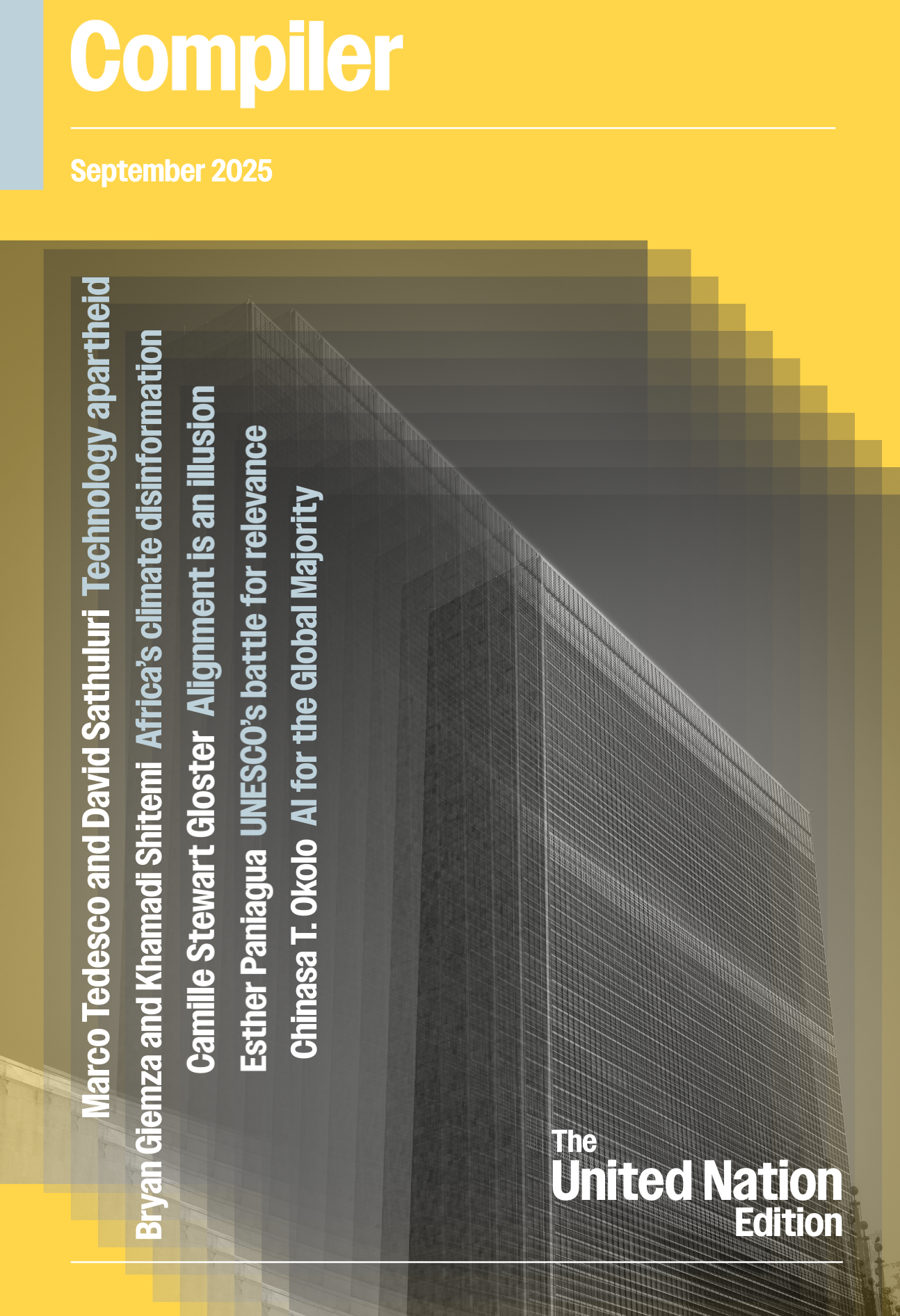
The United Nations Edition
Hello.
The 80th session of the UN General Assembly is underway in New York City. Dignitaries from around the world have descended on Midtown Manhattan for official talks and a dizzying array of side events, receptions and private dinners where the global elite will vie for influence.
Next week, during the High Level meetings, heads of state and UN officials will confront some of the most urgent issues of the moment, such as Palestinian statehood and the worsening climate crisis. It’s an ambitious agenda at a time when this multinational behemoth may be struggling more than ever to prove its relevance.
This year’s theme at the UN is “Better Together.” Yet the backdrop suggests otherwise. President Donald Trump makes sport of undermining global alliances; the world is unable or unwilling to halt atrocities in Gaza or stop Russia’s assault on Ukraine; and social media leaves many convinced the world is more polarized, divided and unhinged than ever. Add to this the rapid, unchecked advance of artificial intelligence, and it’s easy to imagine a dark, dystopian future.
But what if AI could also bring positive change, developing smarter solutions to end disease and fight climate change? Could technology help lead us out of these troubled times and offer new answers to humanity’s most vexing problems?
As the UN meets for the 80th time, we wanted to explore both sides of the AI future through the lens of the UN Sustainable Development Goals, the ambitious targets to end poverty, ensure clean water and advance gender equality. Will AI help achieve these goals, or will this powerful new force create more obstacles to peace and prosperity?
For Compiler’s United Nations Edition, we asked contributors to consider the biggest challenges facing the international community in the age of AI. Their responses are urgent, revealing and often unsettling, reflecting the anxieties of those thinking hardest about where this technology is taking us.
This edition was published to accompany a special Tech Policy Pop-Up on Sept. 16 in New York City co-hosted with Humane Intelligence and Technology Salon, where about 100 participants gathered to discuss AI and the SDGs. The evening featured insights from Dr. Rumman Chowdhury, Mala Kumar, Jona Repishti, Marco Tedesco, Linda Raftree, Vilas Dhar, Veronica Olazabal and Sunil Wadhwani.
Compiler plans to host more of these live journalism gatherings where people can step away from screens and seek solutions together. This edition of the Tech Policy Pop-Up Series was made possible with support from the Heising-Simons Foundation. Thank you for reading and for showing up to the conversations that matter.
—Mike Farrell, Founder, Compiler Media
UNESCO’s fight for relevance
The United Nations cultural agency must prove multilateralism still matters in the age of AI. By Esther Paniagua
How to avoid climate apartheid fueled by A.I.
Divisions of race and class will be dangerously exacerbated through a collision of artificial intelligence and climate catastrophes unless policymakers prioritize algorithmic fairness and more equitable tech. By Marco Tedesco and David Sathuluri
Building AI to serve the Global Majority
The lack of inclusion in global AI governance and development raises several profound implications for socioeconomic growth and global power dynamics. By Chinasa T. Okolo
Global alignment on AI is an illusion
The era of artificial intelligence requires a new approach to cooperation that builds alliances based on regional interests, common goals and technical realities. By Camille Stewart Gloster
Africa is the new front line of climate disinformation
Less than 1% of global research on African disinformation focuses on climate. That’s a problem with lasting consequences for a region constantly battered by climate change. By Bryan Giemza and Khamadi Shitemi